












Buyers arrive at the description after the photos have done their work, which means the words have one job: convert interest into a viewing without spending the trust the pictures earned. Most descriptions fail in one of two directions, the empty three liner that answers nothing, or the exclamation swamp that answers everything except the questions asked. The middle path has a structure, and it is learnable in ten minutes.
The order buyers actually read in
- The essentials confirmed: year, trim, engine, transmission, mileage, in the first two lines
- Ownership story: how long, how used, motorway or town, garaged or street
- Condition, honestly: what is excellent, what is worn, what was repaired and when
- Service history: what exists, what was done recently, what is due next
- The practical details: keys, tyres, MOT or inspection status, included extras
- The sale logistics: viewing, test drive, payment, and why you are selling
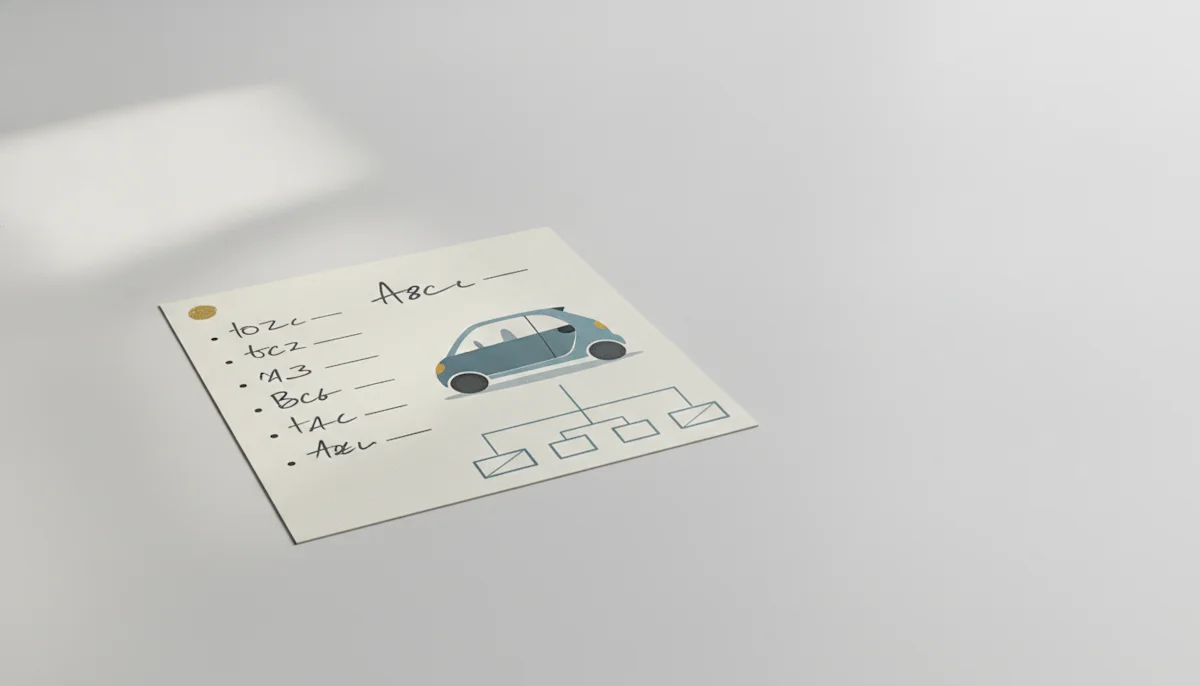
That order works because it mirrors the buyer's internal checklist. Deviating from it does not change what buyers want to know; it just makes them hunt, and hunting buyers drift back to the search results.
Honesty is a pricing strategy
The described flaw costs less than the discovered one. A sentence naming the scuffed alloy and the stone chips, ideally next to the photos that show them, converts a negotiation weapon into a settled fact. Buyers who arrive knowing the car's weaknesses negotiate the price of the car; buyers who discover them negotiate the credibility of the seller, and the second conversation always costs more.
Phrases that repel, and their working replacements
- First to see will buy: replaced by a specific viewing invitation with times
- Drives like new: replaced by the actual recent work, discs and pads in March
- Minor marks commensurate with age: replaced by naming and photographing them
- No time wasters: replaced by nothing, because it filters buyers, not wasters
- Rare opportunity: replaced by the one genuinely notable fact, if it exists
Platforms: structure beats prose
At platform scale, free text descriptions are where quality goes to vary. The fix mirrors the imagery playbook: generate the factual layer from data, specification, history flags, trim details, so it is complete and consistent on every listing, and let sellers write only the part they uniquely know, the ownership story and the condition narrative. Structured plus human beats either alone, and it makes the empty description impossible.
Photos make the promise. The description signs it.
The whole craft compresses into one test: read your description as the buyer's sceptical friend, the one dispatched to find reasons against. Every question that friend can still ask is a sentence you have not written yet.
And measure the effect the way marketplaces do: track viewing requests per hundred listing views before and after restructuring descriptions. Teams that run the test rarely revert, because the structured listings do not just convert better, they also produce viewings where the buyer arrives with accurate expectations, which is the cheaper kind of viewing to host.