












Every condition report is secretly a comparison. The inspector, the leasing return agent and the claims handler are all answering the same question: how does this vehicle differ from the way it left the factory? Yet most reports document only one side of that comparison, the evidence, and leave the baseline to memory and argument. Adding the reference image, the vehicle as built, turns a contested judgement into a visible one.
Where the pattern applies
- Lease and rental returns, where wear versus damage is the entire dispute
- Insurance claims, where the handler prices the gap between built and broken
- Fleet handovers, where drivers sign for a state they should be able to see
- Auction and remarketing inspections, where grades feed prices directly
- Transport damage, where before and after are different companies' problems
Anatomy of a report that settles arguments
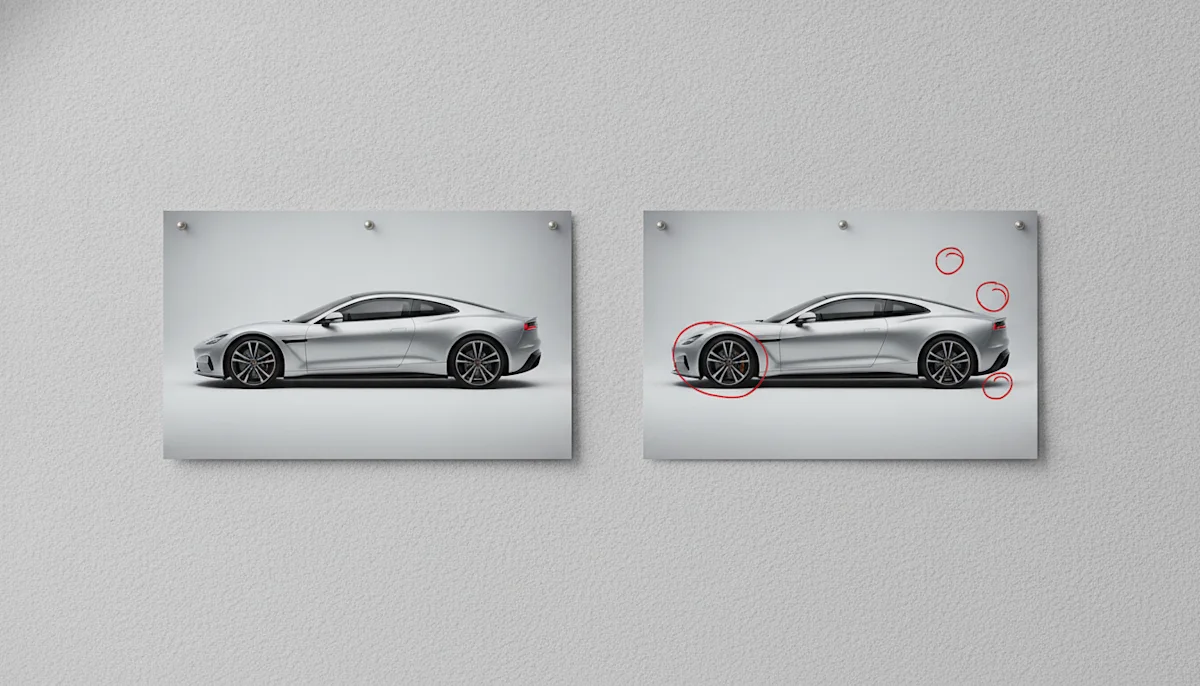
The effective structure places the reference angle beside the evidence photo for each documented issue: the pristine rear three quarter beside the kerbed wheel and scraped arch, same angle, same framing. The reader's eye does the comparison instantly, and the report stops depending on prose to carry what pictures state plainly. Annotations then mark position and severity on a shared visual language rather than on freehand sketches of a generic car.
Why the reference must be the exact vehicle
A generic model outline invites the classic dispute: that trim has different bumpers, those wheels were never standard. Resolving the reference by VIN closes the argument before it opens, because the baseline shows the vehicle as specified, correct wheels and all. In returns and claims, where money attaches to every panel, specification accuracy is not cosmetic. It is the difference between documentation and opinion.
The operational win nobody advertises
Teams that adopt reference backed reports describe the same second order effect: disputes shorten, because both sides argue from the same pictures, and inspector training accelerates, because the report format teaches the comparison. Digital inspection tools get the same upgrade by API, the reference image arriving into the template the moment the VIN is scanned, which turns a philosophy into a form field.
Evidence without a baseline is a story. Evidence beside a baseline is a finding.
The claims specific version of this pattern lives on the insurance page, and the archive discipline, freezing report images with the record, follows the caching guide's document rules.
Getting started without a platform project
The pattern needs less infrastructure than it sounds. A report template with a reference image slot per issue, filled by a VIN lookup at inspection start, upgrades existing processes without replacing them, and even a PDF workflow benefits immediately. The full integration into inspection apps can follow adoption rather than precede it, which is the order that survives budget season.
Photographic discipline for the evidence side
The reference solves half the comparison; the evidence photo has to hold up its half. The rule that matters most is angle matching: shoot the damage from the position of its reference view first, then add close ups. A scraped arch photographed from the reference's rear three quarter reads instantly against the baseline, while a artistic diagonal close up alone forces the reader to reconstruct geometry from imagination, which is where disputes are born.