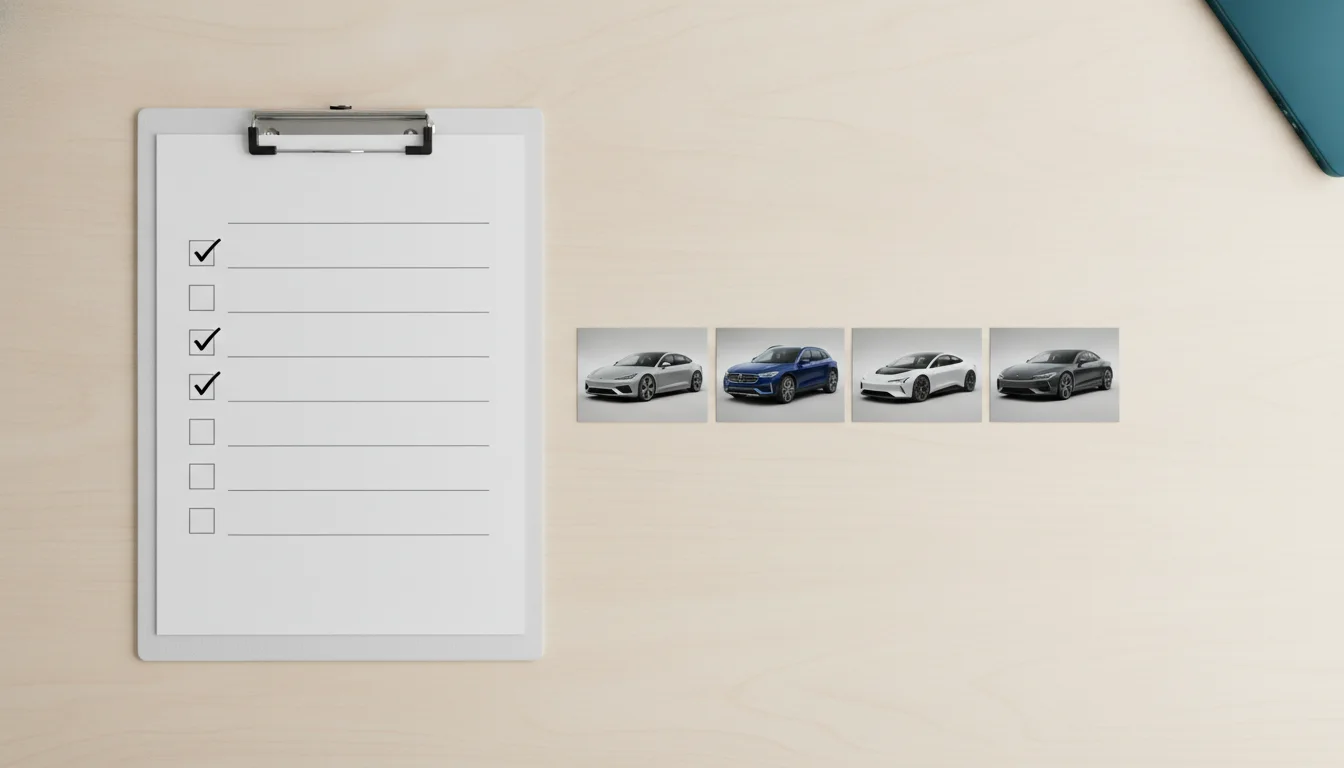












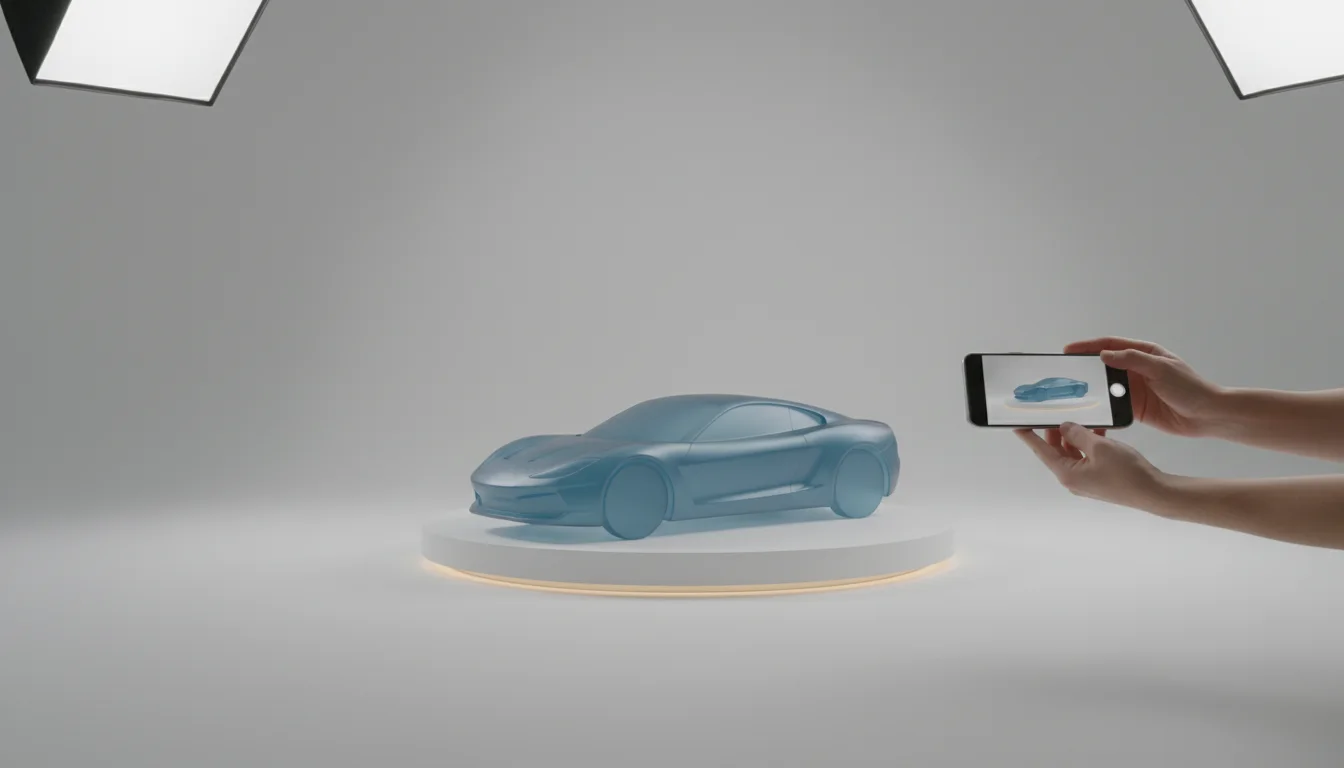
A used car listing answers two different questions with pictures. What is this model, trim and colour: a question about the specification. And what has this particular example lived through: a question about the object. Listings go wrong by making one kind of photo do both jobs, and the fix is embarrassingly simple once the two questions are separated.
The reference layer: what the car is
The specification question wants a clean, consistent studio image of the exact trim in the exact colour: the same picture a new car listing would carry. Rendered from the VIN, it is available for every used vehicle regardless of age or obscurity, and it gives the listing its professional face and its comparable card in the search grid. The trim accuracy page explains why the wheels matter more than sellers think.
The evidence layer: what this example is
The object question wants photographs of this physical car, and here honest beats pretty. Buyers discount listings that hide, and they reward documentation that anticipates their doubts:
- All four corners at eye level, plus straight front and rear
- Every flaw a viewing would find: scuffs, kerbed wheels, worn bolsters
- The odometer, the tyres, the service book
- Interior from the driver's seat, boot open, keys present
Phone cameras are entirely sufficient for evidence. What matters is light, coverage and candour, not equipment: an overcast sky, a step back from the panel, and no creative angles hiding a dent that the test drive will reveal anyway.
How platforms assemble the two layers
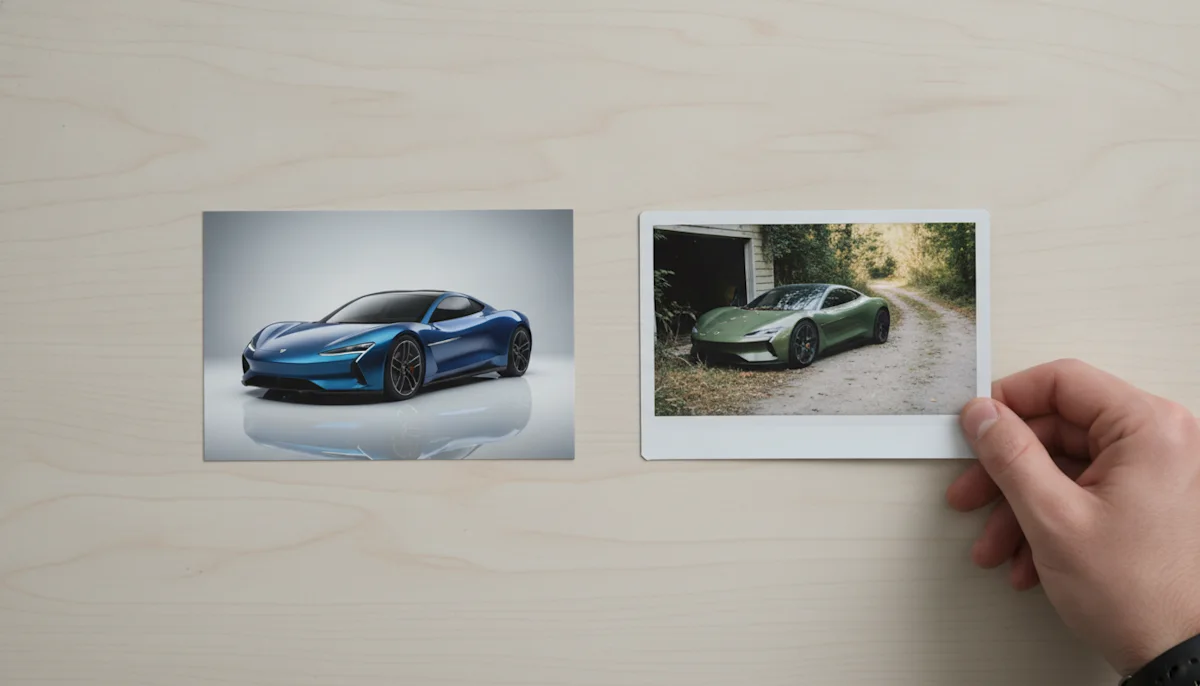
The winning pattern presents the reference image as the listing's hero and the evidence photos as a clearly separate documentation strip. Buyers parse it instantly: this is the car, and this is its story. Mixing the layers into one gallery produces the familiar mess where a studio shot sits beside a rainy driveway photo and both lose credibility.
| Layer | Source | Job |
|---|---|---|
| Reference | Rendered from VIN | Identify and compare |
| Evidence | Seller photos | Document condition |
| Never | Stock lookalikes | Mislead politely |
What this does to trust and time
Platforms that adopt the two layer pattern report the same pair of effects: listings go live faster because the reference layer needs no photography, and disputes fall because the evidence layer set expectations honestly. The marketplace page covers the rollout mechanics, and the listing quality guide diagnoses the failure modes this replaces.
For individual sellers the takeaway fits in a sentence: let the platform show what the car is, and spend your own effort photographing what your car has lived through, truthfully and in good light.
Platforms can nudge all of this with structure instead of rules: a guided capture flow that asks for the corners, the odometer and the flaws produces better evidence than any style guide, because the interface does the remembering. Sellers follow paths far more reliably than they follow policies.
What buyers say when it works
The clearest signal comes from support inboxes. Platforms running the two layer pattern see complaint language shift: fewer messages that begin with the car looked different, more questions about history and price, which are the questions a healthy funnel produces. Expectation management is not a banner promising honesty; it is a listing structured so that honesty is the default reading.