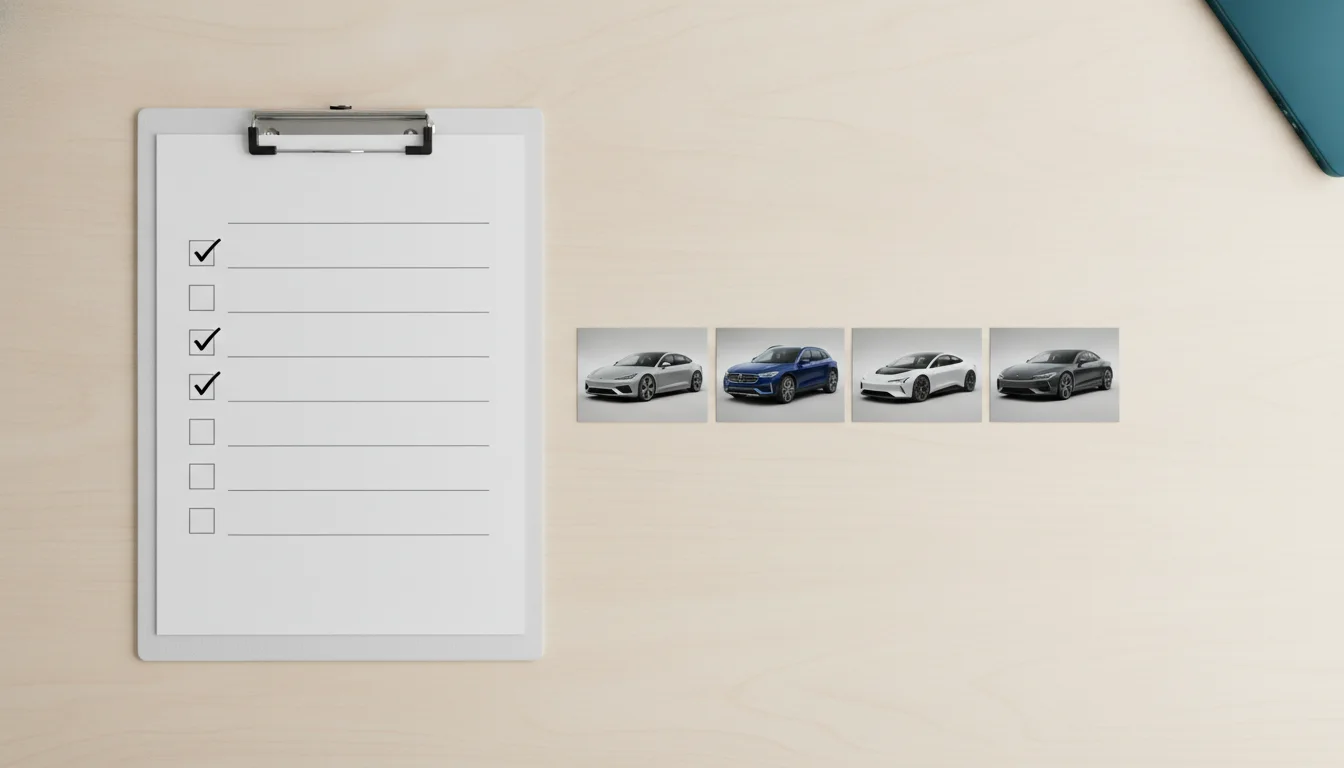












Digital showroom is the car industry's favourite renovation announcement, and the results split cleanly into two families: theatrical experiences that win awards and lose shoppers, and fast honest browsing that quietly sells cars. Having watched both families ship, here is what the converting kind is actually made of.
The load bearing components
- Instant, complete galleries: every vehicle, every angle, interior included, loading like the native app it might be
- A configurator or variant picker that repaints the real car live
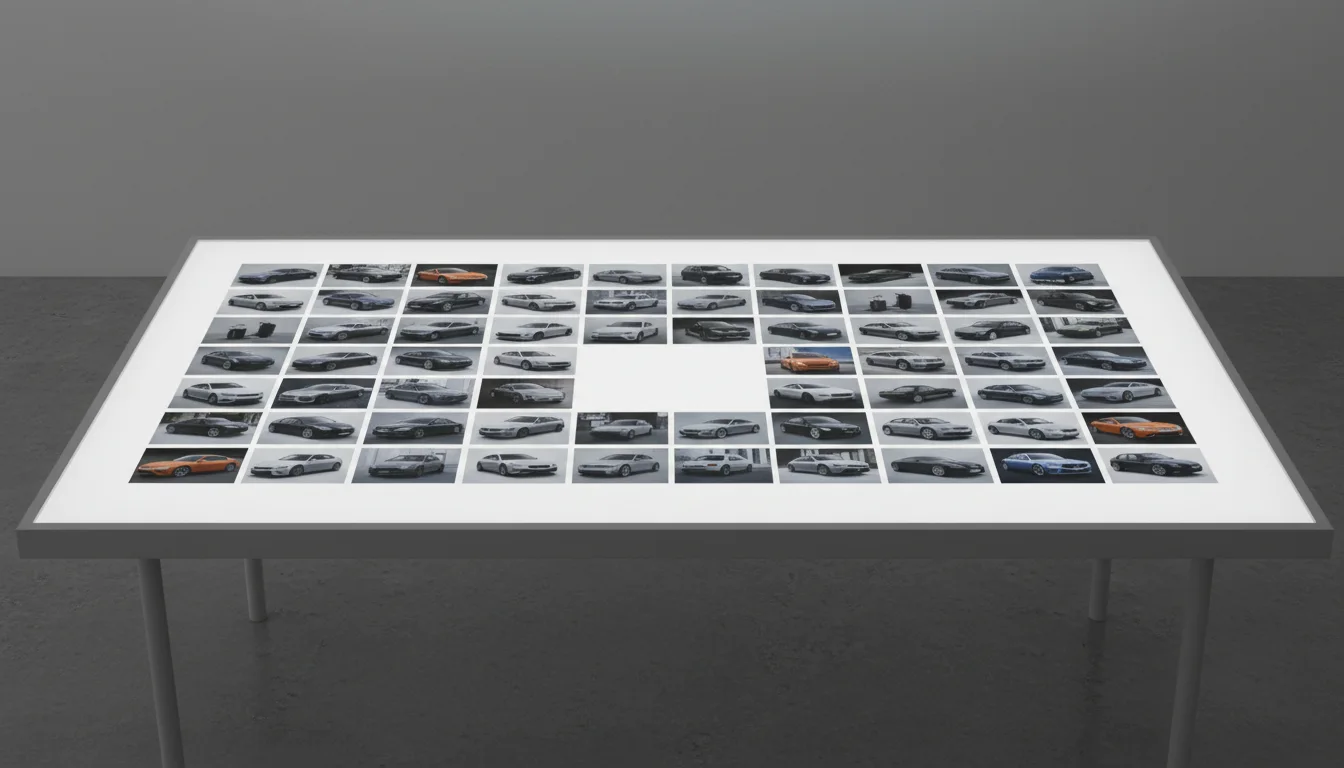
- Comparison that works: identical framing, aligned angles, honest specs side by side
- Availability truth: what exists, what can be ordered, what the wait costs
- A path to a human that carries the configuration along
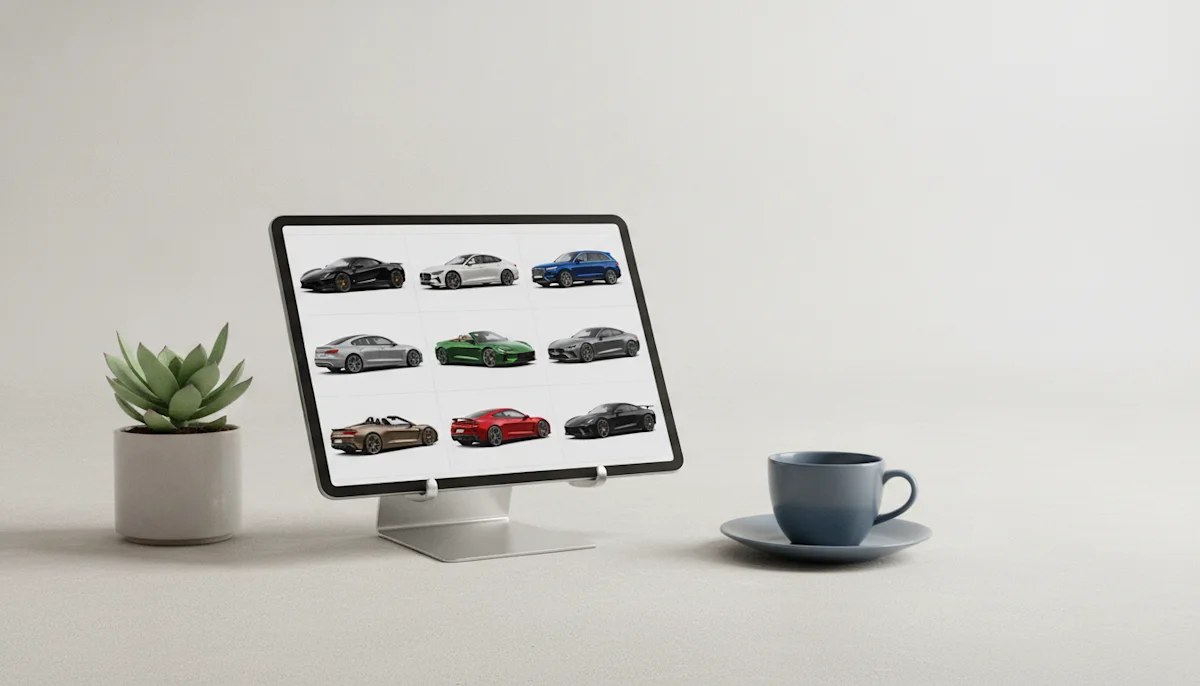
Nothing on that list is cinematic. All of it is what a good salesperson does on the physical floor, translated into interface: show the car properly, answer the next question before it is asked, and never make the customer start over.
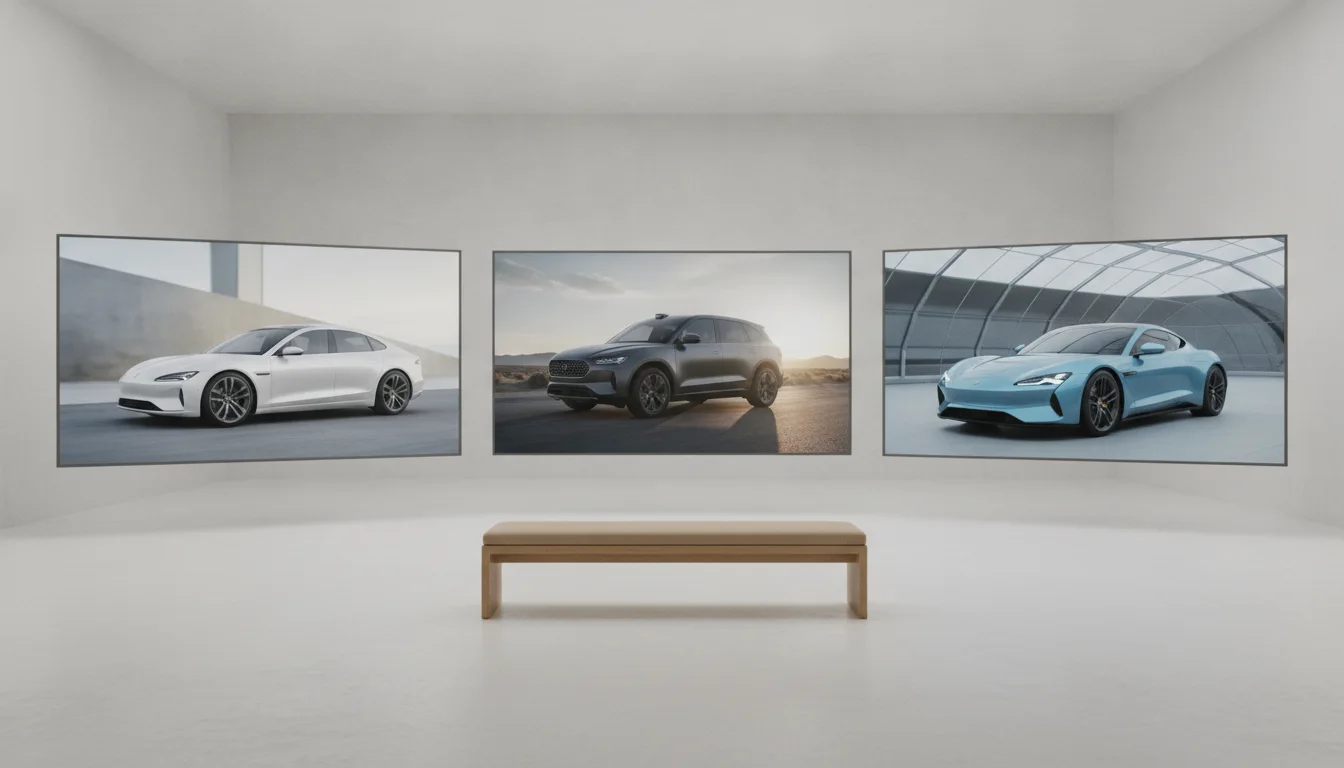
The demo candy that converts never
Full 3D walkarounds, VR modes and cinematic loading sequences share a fate: spectacular in the boardroom, skipped by shoppers on phones. They tax the devices most customers hold, and they answer questions buyers were not asking. The kindest budget decision is usually to let a competitor own them.
Imagery is the floor the showroom stands on
Every load bearing component above is an imagery requirement wearing a feature costume. Instant galleries need complete angle sets at sensible payloads. Live repainting needs factory colours as parameters. Honest comparison needs identical framing across the whole range, which photography cannot produce and rendering cannot avoid producing. Teams that start with the image layer find the showroom half built.
Measuring like a shop, not a launch
- Time from landing to first full gallery viewed
- Configurations completed per session, and where abandons cluster
- Comparison usage, the most underrated intent signal
- Handoffs to humans that arrive with the configuration attached
Vanity dwell time stays off the list on purpose: a shopper lingering may be delighted or lost, and the difference shows up in the four numbers above. Showrooms are shops, and shops measure progress toward purchase.
If the ambition is one coherent system from browse to paperwork, the vehicle image API is the layer that keeps every screen honest, and the rest of the showroom becomes product work rather than asset archaeology.
A closing note on scope: a showroom is never finished, and the teams that thrive treat it as a product with a backlog rather than a launch with a date. The image layer is the part you can settle permanently, which is exactly why settling it first pays for the rest of the roadmap.
The migration path that works
Nobody rebuilds a showroom in one release, and the attempts usually stall in month three. The sequence that survives contact with reality: settle the image layer first, ship the fast gallery on existing pages, add the variant picker where the range supports it, then rebuild comparison. Each step delivers value alone, none blocks the next, and the theatrical features can wait at the end of the queue indefinitely, which is where they belong.